Industry exports provide a map of books, ratings, shelves, and reviews.
Critic intelligence
Good Reviews
A local web prototype that imports industry taste data, review sources, critic corpora, and vector artifacts to rank reviewer and critic fit.
01 / Problem
Readers, publishers, and publicists need better reviewer fit than static lists can provide.
The prototype asks how personal taste, trusted publications, award signals, critic histories, and review text can be turned into a practical fit score. It began as a way to rank reviewers whose reviewed books line up with a reader's strongest preferences, then expanded toward publishing use cases.
Seeded review outlets create a controlled critic universe.
The app scores overlap across books, authors, shelves, genres, sentiment, and prizes.
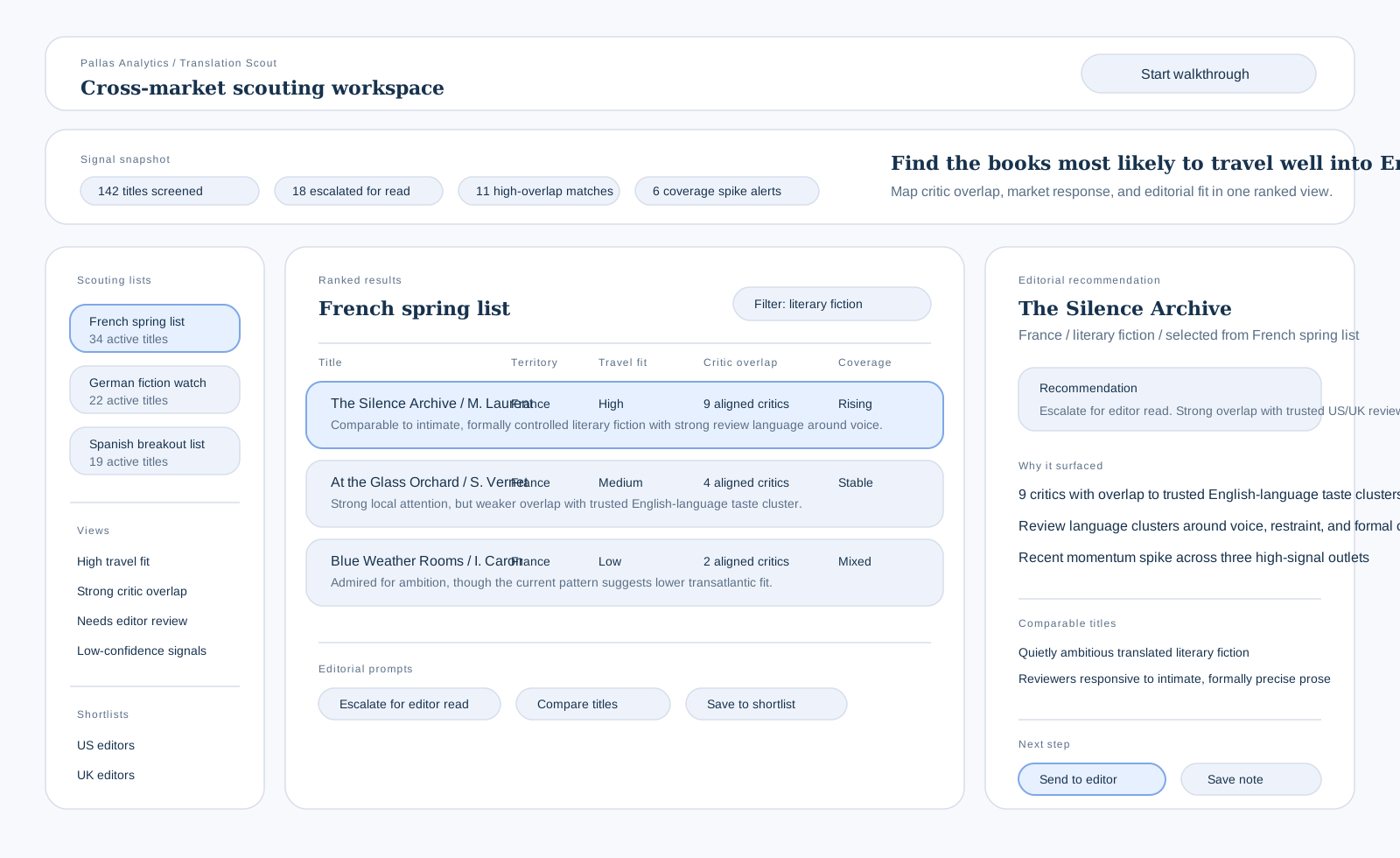
The same engine points toward Critic CRM and Translation Scout.
02 / Architecture
A local data pipeline plus browser app.
The prototype combines Python ingestion scripts, CSV and JSON artifacts, a local static web app, vector-building utilities, source catalogs, and evaluation docs. It can ingest industry exports, load review data, build critic corpora, and present reviewer rankings in the browser.
Processes industry CSV and review source data.
Builds normalized critic-review artifacts.
Stores book, review, and reviewer vector artifacts.
Local app surfaces reviewer fit, source status, and model evaluation data.
03 / Data
The data combines personal reading history, review corpora, outlet metadata, awards, and generated vectors.
The prototype includes sample industry taste data, Book Marks-style review data, scraped review CSVs, source metadata, critic corpus summaries, reviewer tracking, awards catalogs, and vector artifact files.
04 / Prototype
05 / Learned
Personalization and recommendation engines that explain fit and do not veer toward popularity in a generic manner
The prototype showed that the interesting product surface is not a generic recommendation feed. It is a fit-and-evidence system: why this reviewer, why this source, why this title, and what should someone do with that information.
- Source metadata and corpus quality matter as much as the scoring model.
- Personal taste data can become a seed for larger publishing intelligence workflows.
- The system naturally extends into Critic CRM and Translation Scout rather than staying only a personal reader tool.