Climate affects aroma, flavor, yield, chemistry, and consistency.
Climate and sensory data
ClimateSensory
A prototype family for climate risk, sensory quality, and supply-chain intelligence across luxury materials and food systems.
01 / Problem
Climate risk is usually described operationally, but luxury materials fail through quality, sensory, and market effects.
ClimateSensory explores how weather, growing conditions, chemistry, sensory descriptors, supply chains, and market constraints interact. The project asks how a brand or buyer could see risk moving from climate exposure into ingredient quality, substitution pressure, portfolio risk, and sourcing decisions.
Raw materials face grower, geography, harvest, and sourcing constraints.
Brands need to understand correlated exposure across materials and regions.
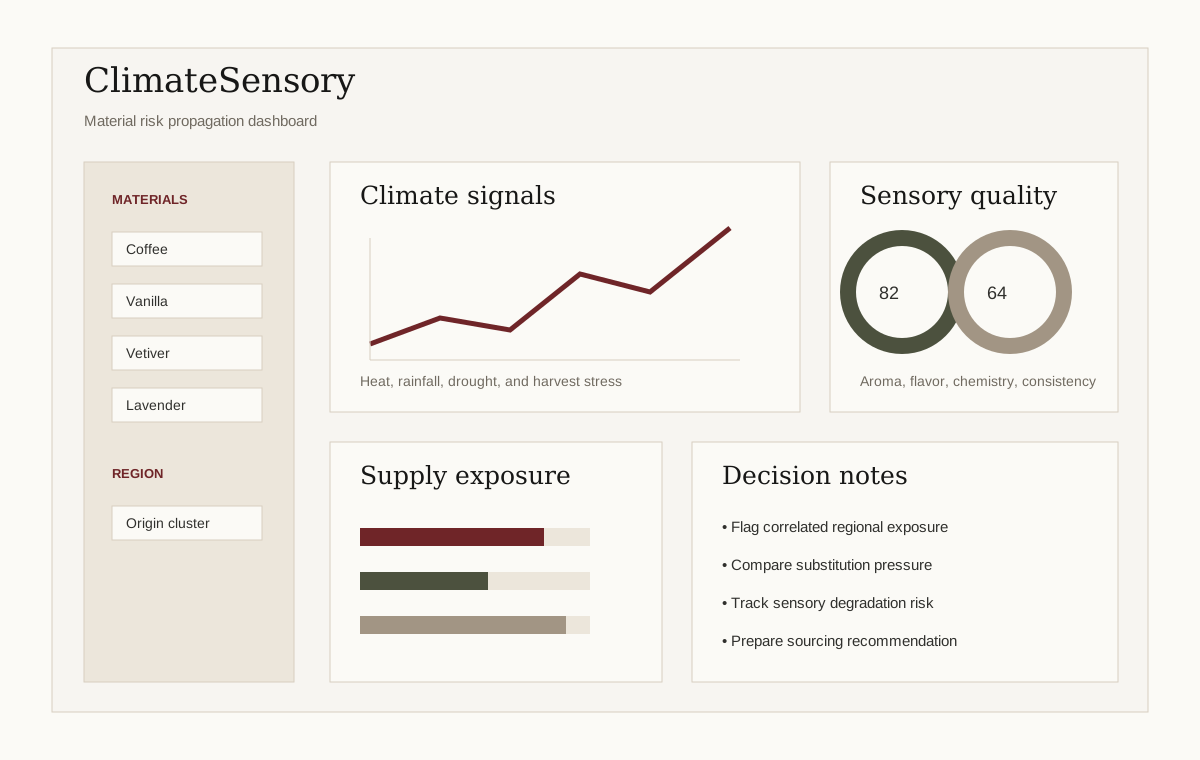
The dashboard translates signals into sourcing and product questions.
02 / Architecture
A risk propagation engine with material-specific dashboards.
The project includes a shared climate risk propagation engine, material-specific models and dashboards, ingestion playbooks, ontology work, and product specs for coffee, vanilla, vetiver, wine, lavender, and perfume raw materials.
Daily and monthly climate panels, stress series, and region metadata.
Descriptors, tasting notes, chemistry-to-quality mappings, and sensory embeddings.
Supply-chain, grower, price, quality, and portfolio decision signals.
Streamlit dashboards for material-specific exploration.
03 / Data
The data model spans climate, chemistry, sensory language, grower context, and material supply chains.
The project contains canonical mapping notes, ontology docs, source strategies, dashboard specs, coffee and vanilla use cases, perfume raw material research, and generated outputs such as climate panels, PCA loadings, risk summaries, forecast files, qualitative corpora, and embedding terms.
04 / Prototype
The prototypes are local Python and Streamlit dashboards.
05 / Learned
The distinctive product angle is climate-to-quality intelligence, not generic climate risk.
This was an Agentic Data Science/Machine Learning full-stack project. We focused on ensuring every calculation, forecast, and projection was correct and stress-tested. When climate shifts show up in flavor, aroma, chemistry, sensory consistency, substitution pressure, and sourcing decisions, we wanted a way to understand the key drivers at any given time.
- Food and luxury materials need quality-centered risk language, not only logistics language.
- Ontology work matters because sensory, chemistry, grower, and climate data do not naturally share a schema.
- The project could become a decision engine for material sourcing, portfolio exposure, and product resilience.